
In this post I’ll share some of the music I love.
If you’re new to classical, here’s a bit of context:
Treat it like going to an art gallery. Wear headphones for the best experience. When you don’t know a piece yet, put all your attention on it, get absorbed in the detail and the harmony.
A big difference between classical and (say) pop music is that there usually isn’t an official version of a classical piece. Every recording is a cover, in a sense.
Different recordings of the same piece are made by different performers with different setups. So you can have a recording that is better in terms of feeling, but really old and fuzzy because it was made with ancient or badly-placed microphones. You can also have a crystal clear recording from 2026 where the musician plays like a soulless robot. (If you like one of the pieces here, I suggest you check out some other recordings of the piece to get a better sense of this.)
I’ll share Spotify links when I can, but sometimes a recording is only available on YouTube.
Philip Glass
You’ve probably heard some music by Philip Glass (1937–). He’s a 20th century minimalist, though he doesn’t identify that way.
He described himself as a composer of "music with repetitive structures"
His music is in fact very very repetitive. This is good because it gives you time to “get it” during your first listen. It’s not so good when you want music that changes quickly, like if you have no attention span or something.
One thing I like is his opera Akhnaten, which tells the story of the pharaoh that decided that everyone should worship the sun disk instead of all the usual Egyptian gods. Here’s the opera’s intro, which has no singing but does have a badass narration at the end which is part of an English translation of the Egyptian Book of the Dead.
Here’s a scene with vocals. Something quite unusual about this scene is that Akhnaten (the first voice to enter) sings in a higher register than the other two characters, who are both women (his wife Nefertiti and his mother Queen Tye).
For good measure, here’s the Glass piece that has the most listens on Spotify.
Schubert
Once upon a time I fell in love with a syphilitic Viennese guy that died 200 years ago. He wrote over 600 songs, and is one of the composers most responsible for how songwriting evolved in the 19th and 20th centuries. Being short and chubby, his friends gave him the nickname Schwammerl, or “little mushroom”.
Like Beethoven, Schubert is classed as both late Classical1 or early Romantic. But where Beethoven sometimes seems like he’s trying to beat the truth out of the universe, Schubert feels more natural and beauty-oriented.
Schubert popularized the impromptu, a kind of short single-movement piano piece. Here’s the best recording of the best impromptu.
Schubert wrote a ton of music, and I find a lot of it a little too simple to re-listen. But near the end of his short life, he wrote some really profound and intimate stuff. Here’s one of the best examples. The performer (Sviatoslav Richter) takes an unusually slow tempo, which creates an ethereal and meditative vibe.2
The next piece is popular, usually known as Schubert’s Ave Maria and sung using the Latin words of the prayer. But this recording uses the original German text instead, which isn’t a literal translation of the Hail Mary but describes a young girl praying to Mary. It also uses a fortepiano, the kind of piano that Schubert played, which is the precursor to the modern piano.
Here’s one more piece of Schubert’s played on a fortepiano, and then a second recording by the same performer but on a modern piano:3
Chopin
He arrived on the scene shortly after Schubert died, and is his natural successor in a way, but more complex, technical, and Polish-flavoured instead of Viennese.
Almost everything he wrote is magical. He’s more popular than Schubert, so for now I’ll just share one of my favourite nocturnes.
Godowsky
Leopold Godowsky was one of the best pianists of all time, and one of the musicians who added the most to the art of composing for the piano. He was also a big fan of Schubert and wrote a tribute to him: a passacaglia, which is a bunch of variations with a shared bassline. Here, the bassline comes from the beginning of Schubert’s “Unfinished” Symphony 8. Turn up the volume and listen to the first 12 seconds of this:
Now the variations. In some of them, Godowsky ropes in other Schubert themes as well, including the famous Erlkönig.
He also wrote a bunch of variations on Chopin’s Études. The Études are famously difficult, but Godowsky’s variations are considered some of the most difficult piano pieces ever written. For example, first consider this Chopin original:
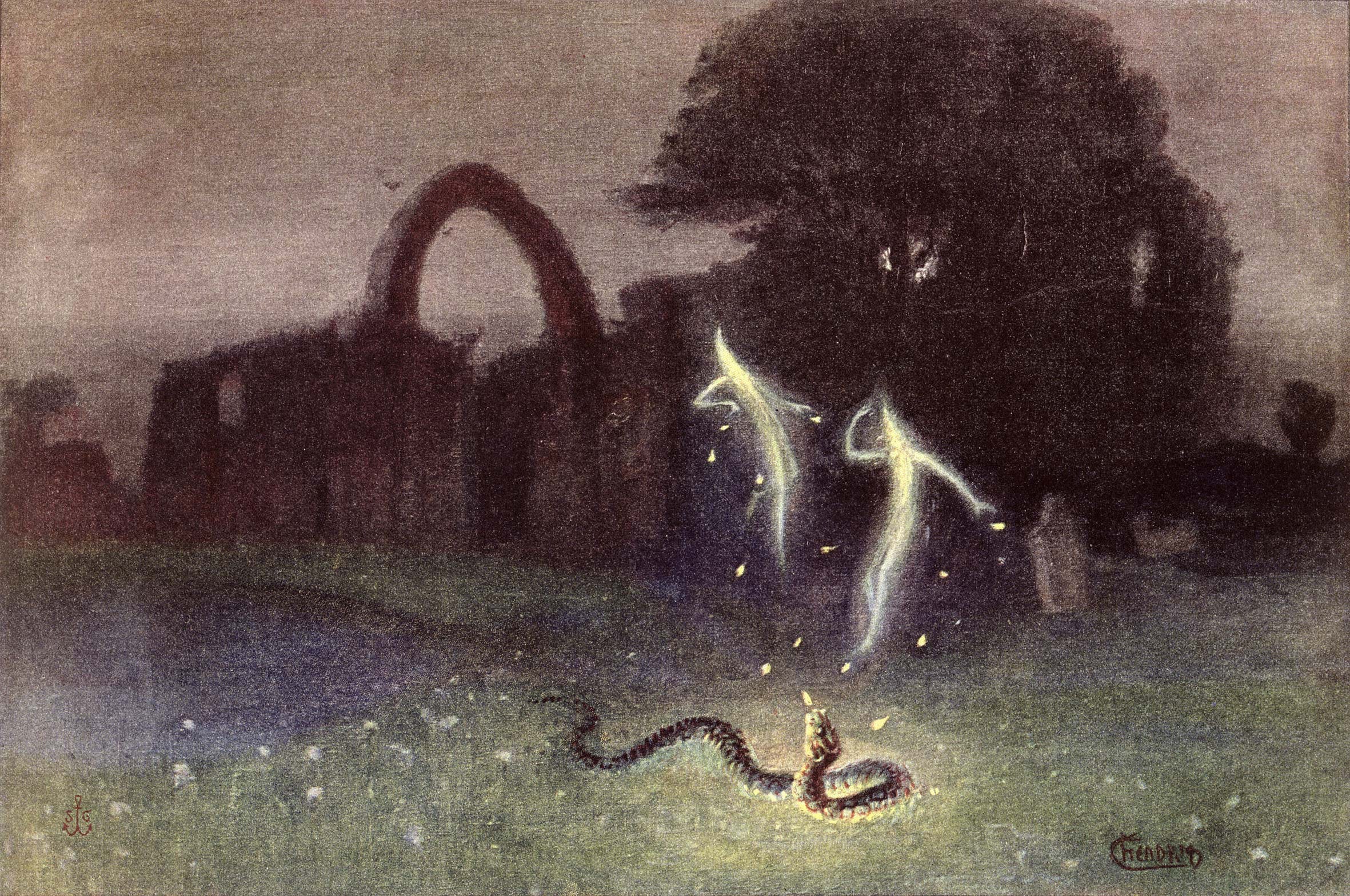
And now the Godowsky’s incredible variation, called “Ignis fatuus”, which is Latin for will-o’-the-wisp, or the ghostly, dancing lights seen at night by travellers in European folklore.
Fin
In the future, I’ll make more posts about the music I like: Bach, Wagner, Richard Strauss, Stravinsky, and others. And maybe some non-classical stuff, too.
What the average person calls “classical music” (and the way I use it in the rest of the post) is an umbrella for all of the music written in the West in the last ~1200 years, that doesn’t fall under other genres like folk music, pop music, jazz, and so on. To a music historian, “Classical” means music written in the period 1750–1820; the most famous Classical composer is Mozart.